Healthcare
Hospital and Healthcare Security Consultants

Notable U.S. healthcare systems have entrusted SRMC with security assessment, planning, design, and training for over 35 years.
Hospitals operate 24 hours a day, stay open to the public, and serve people and families during some of the hardest moments of their lives. Security has to support that mission without disrupting care. Having led hospital security programs firsthand, our consultants bring real-world operational experience to every engagement. Combined with our independence from technology vendors and integrators, this allows us to provide objective recommendations that serve only your interests.



Workplace violence prevention stopped being optional for hospitals a while ago. Most now answer to more than one rule, and every one of them starts with an assessment.
The Joint Commission raised the issue in 2010 with a Sentinel Event Alert urging hospitals to train staff to recognize and manage violent behavior, and again in 2018 with a call for mandatory de-escalation training. On January 1, 2022, workplace violence prevention became a condition of accreditation. The National Performance Goals, in effect since January 2026, add an annual worksite analysis: a hard look at the site, the hospital’s own incidents, and what will be done about them.
The states have filled in where federal law hasn’t, and more than a dozen now have hospital violence laws of their own. Ohio requires a security risk assessment of every hospital and an annual attestation to the state. North Carolina requires every hospital with an emergency department to assess, plan, and always keep a law enforcement officer on site. Virginia requires every workplace violence incident to be documented and analyzed. California has mandated weapons detection screening in hospitals through AB 2975 and is now finalizing the standards, with compliance expected in 2027.
Ohio’s requirement is HB 452. The assessment covers the emergency and psychiatric departments and every other high-risk area, with an annual review and attestation to the Ohio Department of Health. North Carolina’s requirement is the Hospital Violence Protection Act. Virginia’s annual reports to the Department of Health begin in July 2026, and the state bars firearms from facilities that provide mental health services. California’s AB 2975 has the state adopting hospital weapons-screening standards by March 1, 2027. Connecticut, Illinois, Maine, Maryland, Minnesota, New Jersey, New York, Oregon, Texas, and Washington have prevention or reporting laws of their own.
SRMC has built workplace violence prevention into every hospital assessment since The Joint Commission first raised the issue in 2010, long before any state required it. The assessment these rules call for is the work we do: an independent review of each facility’s high-risk areas, with findings a hospital can act on and defend in front of a board, surveyor, or regulator.
No two hospitals are alike, so no two assessments are either. These are the areas we look at most often.
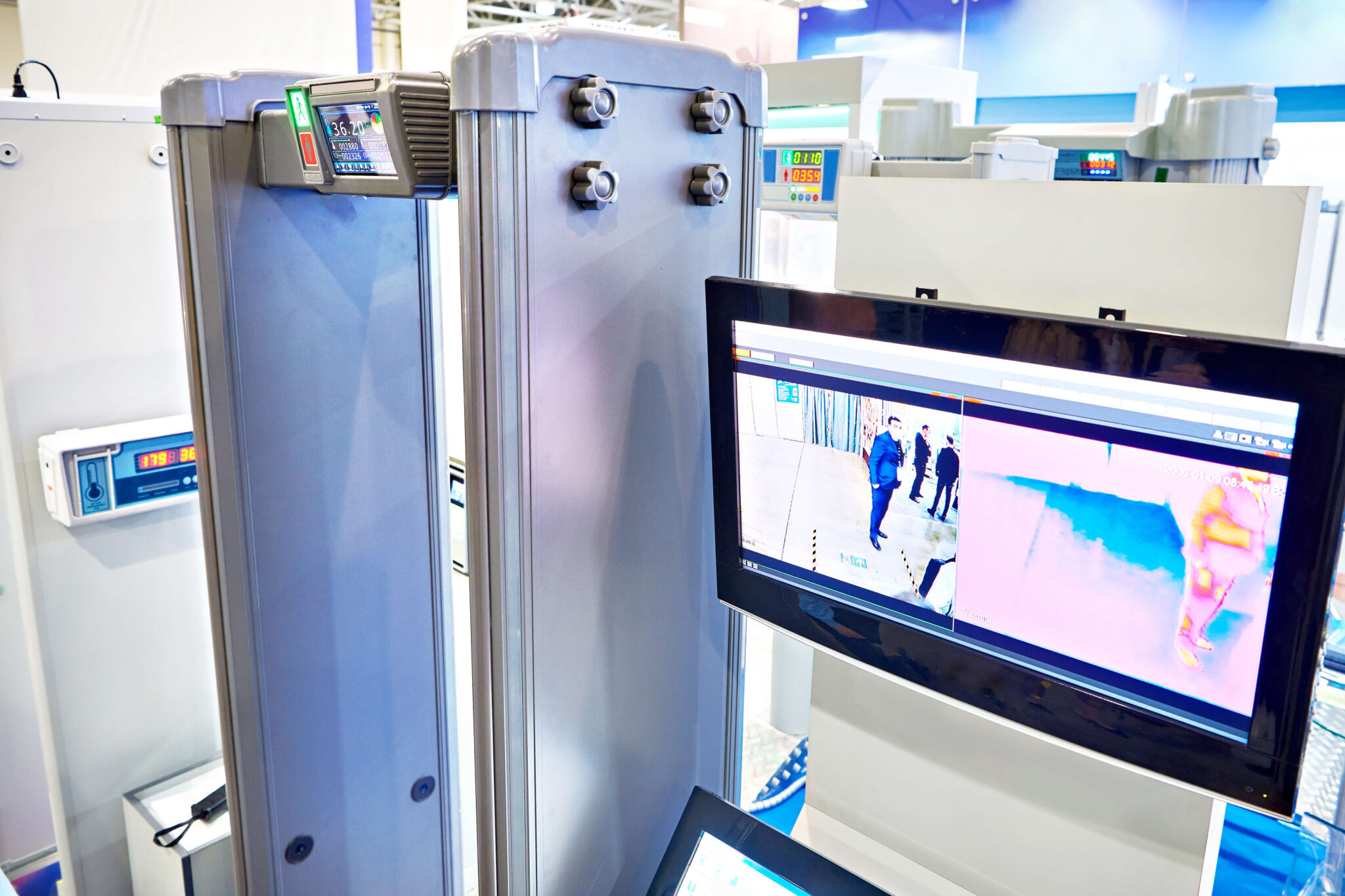
Often the first place weapons screening goes in, and a primary focus of state requirements. We look at how patients, visitors, and staff move through the space, where screening and staffing can improve safety, and how incidents are handled when a situation escalates.
An area where patient care, staff safety, and security operations intersect. Behavioral health and emergency department security are specialties of the consultants on this page. SRMC has helped plan, develop, and fully implement multi-tier behavioral health crisis centers for clients.
How many public entrances a campus needs, which ones should be screened, and how to staff them while keeping the building welcoming: a common challenge for healthcare organizations. For Hennepin Healthcare, SRMC’s Five Points of Entry analysis covered access control, weapons detection, staffing, and the policies needed to sustain the screening program.
Where officers are posted, where the security operations center and substations are located, and whether the staffing model aligns with the organization’s risks and operational needs. We also assess how hospital police, in-house and/or contract security officers, and off-duty law enforcement should be deployed and integrated, particularly in high-risk areas such as the emergency department and behavioral health units.
Access control, video surveillance, intrusion detection, and the command center that ties them together. Across a multi-site system, we evaluate how well these technologies work as one. Because SRMC doesn’t sell, install, or maintain security systems, our recommendations rest on your operational needs, your risks, and your long-term objectives.
Policies, procedures, training programs, and incident reporting: the parts of a program regulators and accreditors read most closely. We evaluate them alongside incident trends and history, because risk shows up in the incident data as much as in the floor plan.
Parking lots, garages, exterior spaces, and the perimeter, often where incidents start. We evaluate lighting, surveillance, emergency communications, patrol strategies, and environmental design across the campus to find the weak points.
Search for healthcare weapons screening and you’ll find no shortage of technology vendors. SRMC approaches the issue differently.
We start with the risks, the security objectives, how the facility operates, and how people move through the campus. A screening program is more than equipment. It needs the right staffing, procedures, training, secondary screening protocols, and throughput planning to hold up during daily operations. The programs that work match the technology to the organization’s needs, so screening improves safety without disrupting patients, visitors, or staff.
We work with health systems, medical centers, community hospitals, and specialty facilities of every size.
Finding the right security leader takes industry expertise, not only recruiting experience. SRMC’s consultants have led security programs themselves and know firsthand what the role demands. We evaluate candidates on practical experience, leadership ability, and fit with your organization’s culture and objectives, not on a résumé review alone. When you need leadership now, an SRMC consultant can step in as interim or fractional Security Director and keep the program moving while the search runs.
“Working with SRMC enabled us to confidently plan, develop, and fully implement a multi-tier behavioral health crisis center. Their support and expertise allowed us to move forward knowing that every aspect of our security needs was being thoroughly assessed and addressed. SRMC worked with us over an extended period, taking the time to understand our needs and adjust the plan as necessary to ensure we created an environment where our team can safely deliver empathetic behavioral healthcare to our community.”
Ryan R. Dudley, LCSW, MBA, Deputy Executive Director, Hampton-Newport News Community Services Board
Hospital security is a specialty, and these consultants have spent their careers in it.

More than 40 years in security and law enforcement, including 30 years in healthcare security and public safety. Past President of IAHSS and a board member who helped develop healthcare security best practices. Led security programs for a leading academic health system that earned the IAHSS Lindberg Bell Award twice during her tenure. Recipient of the IAHSS Foundation Distinguished Service Award.
View Bio
More than 45 years of security experience, including service as a U.S. Army Military Police officer and 21 years leading security programs in pediatric healthcare. Under his leadership, a nationally recognized pediatric healthcare organization earned IAHSS Program of Distinction and Lindberg Bell Award recognition, and he was honored as Manager of the Year. Immediate Past President of IAHSS and an expert in Joint Commission and CMS security management plan requirements.
View Bio
More than 40 years in law enforcement and security. Founded and led a nationally recognized healthcare police and public safety program for 22 years, growing it from a single Level I trauma center to a multi-facility health system. Later served in executive security and law enforcement leadership roles within academic healthcare environments, where her team received the IAHSS Lindberg Bell Award. Author of Preventing Violence in the Emergency Department.
View Bio
More than 38 years in law enforcement and security, including 18 years leading healthcare security programs and 20 years as a police officer and detective. Former Director of Safety and Security for a large academic medical center, overseeing more than 160 employees. Expert in healthcare security management, workplace violence prevention, threat assessment, emergency preparedness, investigations, and organizational security strategy.
View Bio
More than 25 years in public safety and security, including senior leadership roles with a major pediatric healthcare system and a large academic health system. Expert in healthcare security, workplace violence prevention, threat management, security operations, regulatory compliance, and crisis response. Also, an experienced security consultant and expert witness in negligent security and use of force matters.
View Bio
More than 25 years in public safety and security, including executive leadership as Chief of Police for a 16-facility hospital system in Southwest Ohio and as a municipal police chief. Expert in healthcare security, workplace violence prevention, threat management, security operations, law enforcement, emergency preparedness, and crisis response.
View BioA single-facility assessment usually takes one to five days on site, depending on the size, complexity, and scope of the engagement. For systems with multiple hospitals or campuses, several days to several weeks, depending on the number of facilities, how spread out they are, and what the assessment covers.
You get a clear roadmap of prioritized recommendations to strengthen your security program and support your long-term objectives. Many organizations keep SRMC on to help carry it out: access control upgrades, security operations center modernization, policy and procedure development, staff training, and program management. These engagements often run for several years, with SRMC as the advisor your team calls as the program matures.
State laws and accreditation standards increasingly require a security risk assessment, but most say little about who should perform it. The assessment has to cover the high-risk areas, bring in the clinical and operational leaders who run them, and support ongoing review. Hospitals bring in SRMC when they want an independent set of eyes, one method across multiple facilities, and findings that hold up in front of executives, regulators, accreditors, and the board.
Yes. While SRMC is headquartered in Columbus, Ohio, we maintain ten offices nationwide and serve healthcare organizations throughout the United States. Our consultants have worked in 47 states with health systems, academic medical centers, community hospitals, behavioral health facilities, and specialty care organizations.
No. SRMC is an independent security consulting firm with no ties to security equipment manufacturers, systems integrators, or contract security providers. We don’t accept commissions, referral fees, or other financial incentives. Our recommendations rest on your organization’s risks, operational needs, and long-term objectives.
A contract security provider runs day-to-day operations: officers, patrol, and response. A systems integrator designs and installs security technology. An independent security consultant represents the owner’s interests, evaluating people, policies, operations, and technology as one program, so you can make informed decisions before investing in personnel, services, or equipment.
A discovery call is a short conversation with an SRMC consultant about your organization, your current security concerns, and your objectives. It surfaces the main challenges, answers your first questions, and settles the best next step for your facility or health system.