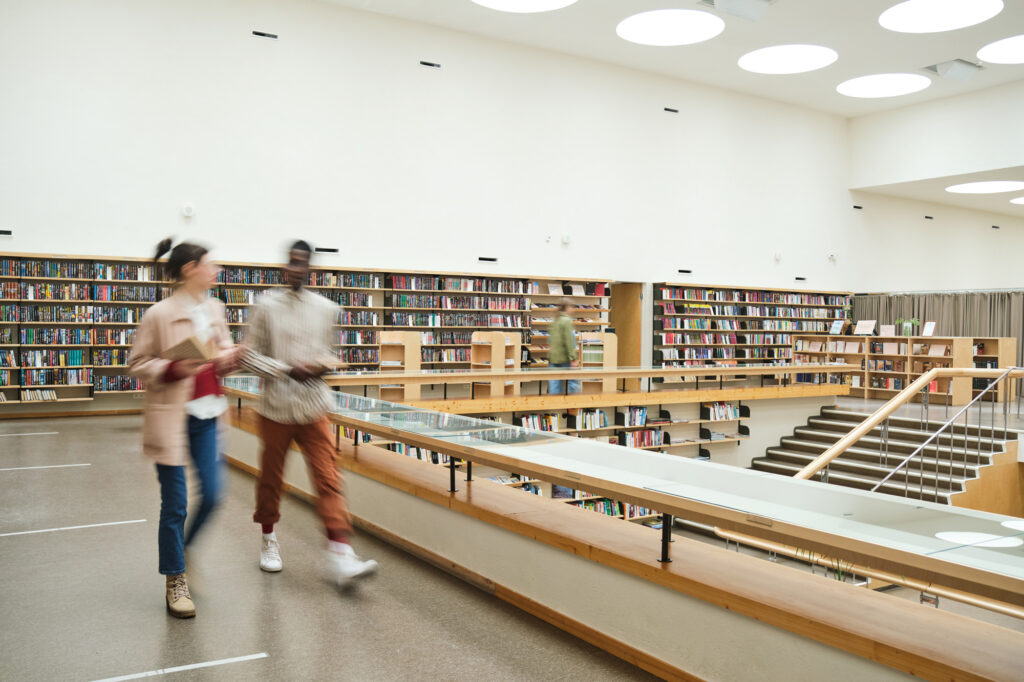
A suburban public library system serving a diverse community retained SRMC to conduct a comprehensive review of its security programming across its main facility and neighborhood branch locations. The libraries function as open, welcoming civic spaces that support patrons of all ages, including children, teens, adults, and seniors. In addition to traditional library services, the facilities host community programming, youth activities, public meetings, and cultural events. Library leadership initiated the assessment to ensure that existing security practices, staffing models, technologies, policies, and training adequately supported the organization’s mission of providing an inclusive, safe, and accessible environment while addressing evolving risks and operational challenges
Our Approach
SRMC applied a holistic, systems-based assessment methodology focused on the integration of people, processes, and technology. The engagement included on-site observations, interviews with executive leadership, managers, frontline staff, and safety personnel, and a review of current policies, procedures, emergency plans, and training practices. The assessment evaluated physical security technologies such as access control, video surveillance, intrusion detection, panic alarms, and mass notification systems, as well as environmental conditions using Crime Prevention Through Environmental Design (CPTED) principles. SRMC also reviewed staffing and deployment models, incident reporting practices, and community crime data to better understand risk exposure and response capabilities. This approach allowed SRMC to identify vulnerabilities, assess alignment with organizational culture, and develop practical recommendations tailored to the library’s operational realities and community expectations
Results
The assessment found that the library system had made thoughtful investments in security infrastructure and had cultivated a strong service-oriented culture focused on de-escalation, problem solving, and customer engagement. Existing video surveillance, emergency notification systems, and access controls provided a solid foundation, but opportunities existed to improve coverage in select interior and exterior areas and to enhance forensic value through improved camera placement. SRMC identified the need for a more sustainable and scalable staffing model that relied less on a traditional uniformed security presence and more on trained staff and targeted support roles, particularly during peak youth usage periods. Additional findings highlighted gaps in formal security-related training, workplace violence prevention programming, and consistency in incident documentation. SRMC developed a prioritized set of recommendations designed to strengthen situational awareness, improve staff confidence and preparedness, and better align security practices with the library’s welcoming mission and community-focused values.
Conclusion
Through this engagement, SRMC delivered a confidential, actionable security roadmap that supports the library system’s commitment to being both open and safe. The assessment reinforced leadership’s proactive approach to risk management and provided clear guidance for enhancing security technologies, staffing strategies, policies, and training over time. By emphasizing prevention, de-escalation, and shared responsibility for safety, SRMC helped position the library system to better manage evolving risks while preserving its role as a trusted, inclusive community resource. The resulting framework enables ongoing improvement and adaptability, ensuring the libraries remain resilient, welcoming, and secure for patrons, staff, and visitors alike